A selection of works from the collection of Seimei Kaikan, the art hall of Shin Kenko Kyokai in Japan — spanning classical Japanese painting, ukiyo-e, Western and modern art, fine ceramics, and sacred paintings of the world’s religions.

Japanese-Style Painting (Nihonga)

Ink and color in the classical Japanese manner.

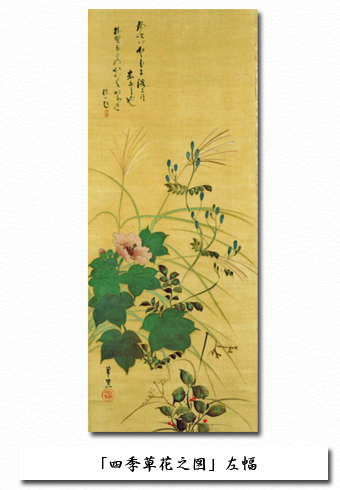
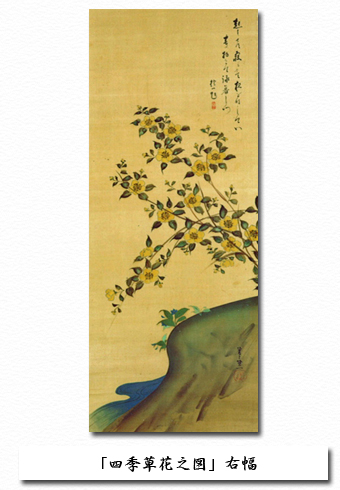
Flowers and Plants of the Four Seasons — Suzuki Kiitsu Flowers and Plants of the Four Seasons — Suzuki Kiitsu

Flowers and Plants of the Four Seasons 《四季草花之図》

Suzuki Kiitsu (1796–1858)

A master of the late-Edo Rinpa school, Suzuki Kiitsu was born in the 8th year of Kansei (1796) into the family of an Edo dyer. Skilled at painting from childhood, at eighteen he studied under Sakai Hōitsu, the great master of Edo Rinpa. Kiitsu faithfully inherited his teacher's manner — so faithfully that some believe he may at times have painted works on Hōitsu's behalf. After Hōitsu's death he gave rein to his own imagination and elevated the traditional Rinpa style toward a more modern art.

This work is thought to date from his fifties and bears the signature “Seisei Kiitsu.” The flowing lines of the stream and trailing vines, and the natural composition of seasonal flowers and grasses, sound the fragrance of late-Edo Rinpa high and beautifully.
Early Spring — Kawai Gyokudō

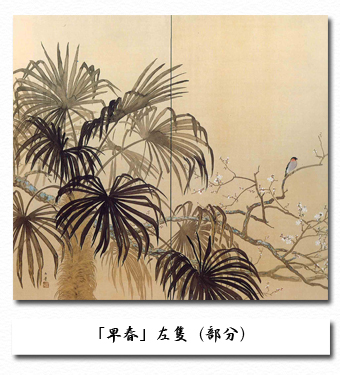
Early Spring 《早春》

Kawai Gyokudō (1873–1957)

Born in Aichi Prefecture in 1873. Resolving at fourteen to become a painter, he went to Kyoto and entered the studio of Kōno Bairei, exhibiting at the National Industrial Exposition while he trained. At twenty-two he met Hashimoto Gahō at that exhibition, moved to Tokyo, and became his pupil; the bond thus formed lasted a lifetime and profoundly shaped Gyokudō's art and life.

This work is a two-panel folding screen. Using the Kanō-school ink technique handed down from his teacher, he simplified color, line, and form: behind a stylized windmill palm he set white plum blossoms and a bullfinch perched among them, evoking the fresh air of early spring with a decorative, Rinpa-like effect — a superb piece.

Celestial Maiden (drawing) — Tomita Keisen

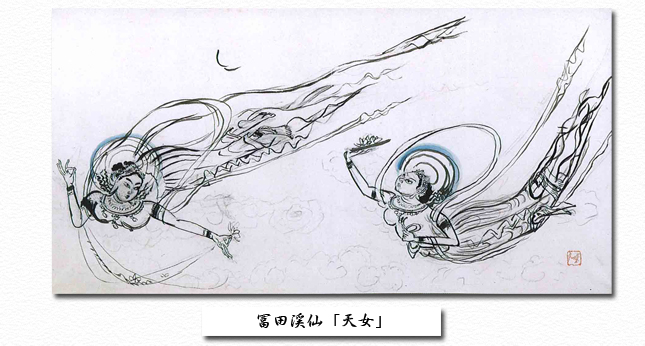
Celestial Maiden (drawing) 《天女》

Tomita Keisen (1879–1936)

Born in 1879 into a long-established Hakata sōmen-noodle house in Shimokawabata, Hakata. At eighteen he left home for Kyoto and studied under Tsuji Kakō, immersing himself in the Shijō school and, drawn to Sengai and Tessai, learning Buddhist painting and nanga (literati painting). Tempering mind and body through a wandering life across Japan, Taiwan, and China, he developed a singular style of deepening spirituality; by the early Shōwa era he ranked in the Kyoto art world alongside Tessai and Seihō.

This work is a line drawing in which the supple pose of the celestial maiden praising the Buddha's virtue, the flow of her robes, and the artist's care in her hands and face are all vividly expressed.

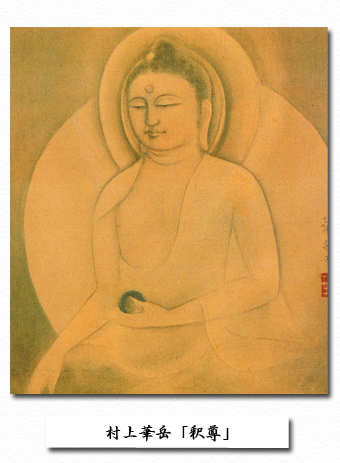
The Buddha — Murakami Kagaku

The Buddha 《釈尊》

Murakami Kagaku (1888–1939)

Born in Osaka in 1888. He entered the Kyoto City Specialist School of Painting (now Kyoto City University of Arts) under Takeuchi Seihō. Exhibiting at the Bunten while still a student, in 1918 he founded, with fellow alumni Tsuchida Bakusen, Sakakibara Shihō, and Ono Chikkyō, the Kokuga Sōsaku Kyōkai, a valuable movement that took in fresh Western sensibilities. After it disbanded he cut ties with the art world and, in Kobe, painted works of high spirituality grounded in his own religious outlook.

The Buddha appears clothed in golden light; from his long, narrow eyes overflow deep love and compassion for humankind. Within that expression — carrying even a trace of allure — may lie the essence of the art, and the prayer, that Kagaku pursued as a seeker within religion.

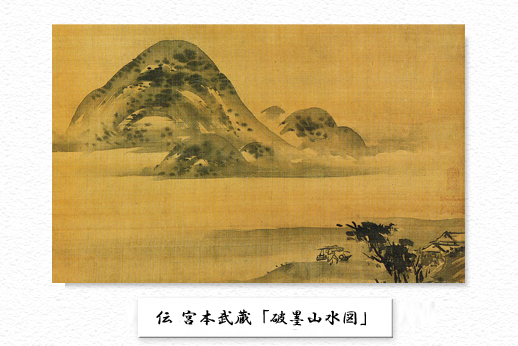
Broken-Ink Landscape — attributed to Miyamoto Musashi

Broken-Ink Landscape 《破墨山水図》

attributed to Miyamoto Musashi (1584–1645)

The many works on Musashi — over 500 books plus countless film and television adaptations — are too numerous to count. Across his life he is said to have fought more than sixty duels, among the greatest those at Hannyazaka, Ichijōji, and Ganryūjima, and never knew defeat. In his later years he was invited by Hosokawa Tadatoshi, lord of Higo Kumamoto, and lived there as a guest, where he wrote his famous treatise, The Book of Five Rings (Gorin no Sho).

Master of the sword though he was, he also showed outstanding gifts in the static arts of calligraphy, painting, and sculpture. In this landscape, do the dark ink lines and blurred washes added to the pale ink surface not let you sense a latent strength and sharpness within the stillness of the whole scene?

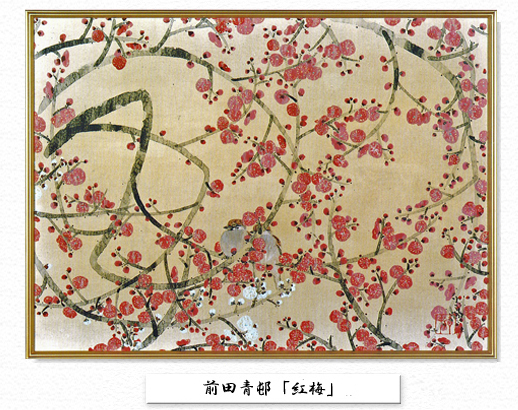
Red Plum — Maeda Seison

Red Plum 《紅梅》

Maeda Seison (1885–1977)

Born in Gifu Prefecture in 1885. He studied under Kajita Hanko, and with the 1914 revival of the Inten he joined Yasuda Yukihiko and others; “Yukihiko and Seison” were then the two great pillars of the Inten. Specializing in history painting and building on the Japanese classics, his works — pervaded by deep stillness — show a high refinement. At 88 he and his pupils made copies of the Takamatsuzuka tomb murals.

This work is a red-plum picture that fills the eye with the very feel of spring. The festive crimson that seems to dye the warming air, two birds rejoicing in spring, and the bold circular sweep of the branches recall the decorative Rinpa manner from the old Momoyama age. Bringing to life the world of Sōtatsu, the Rinpa founder whom Seison admired, it is a Japanese beauty of dignity and fragrance that Seison brought to bloom.

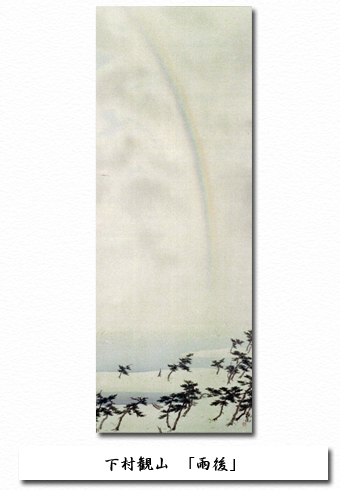
After the Rain — Shimomura Kanzan

After the Rain 《雨後》

Shimomura Kanzan (1873–1930)

Born in 1873 in Wakayama into a family of Noh actors serving the Kishū Tokugawa house. He studied under Kanō Hōgai and Hashimoto Gahō and graduated from the Tokyo School of Fine Arts, becoming an assistant professor; but when his teacher Okakura Tenshin resigned as principal, he too left, joining Yokoyama Taikan and others in founding the Japan Art Institute. He ardently studied yamato-e and Rinpa while releasing masterpieces that took in new decorative qualities and a world of yūgen.

“After the Rain,” a late work, is based on the rainbow fusuma paintings he presented to Ōhara Sanzen-in in 1929; it vividly depicts the sea beyond a pine grove and a rainbow arcing across the sky — Kanzan's world, in which the beauty of yamato-e and Rinpa is sublimated into modern Japanese painting.

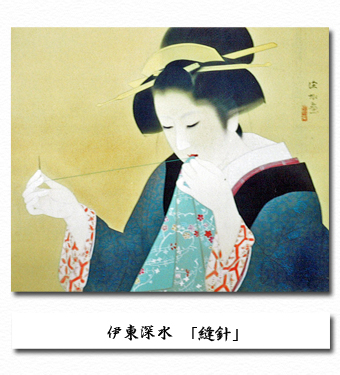
The Sewing Needle — Itō Shinsui

The Sewing Needle 《縫針》

Itō Shinsui (1898–1972)

In this work a woman with her hair dressed in the Japanese style, in kimono and doing needlework, cuts a thread with downcast eyes; the exquisite composition and refined touch capture even the air of allure drifting from the needle and thread and from the woman's fingers and mouth.

Shinsui was born in Fukagawa, Tokyo, in 1898. While working as a printer he became a pupil of Kaburaki Kiyokata and was active at the Bunten, Teiten, and postwar Nitten. Descending from the Utagawa school, the women he painted were called “Shinsui beauties,” portraying the ideal female beauty of their age. After the war he also depicted the swiftly changing world with a modern sensibility, leaving many masterpieces.

Ukiyo-e Woodblock Prints

Prints and hand-painted works in the floating-world tradition.

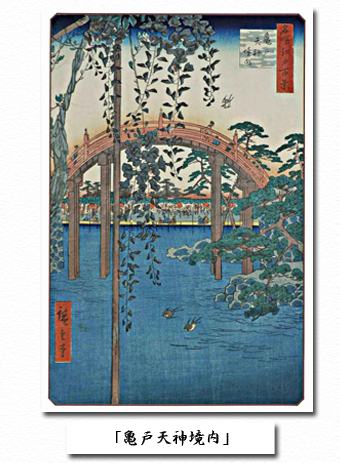
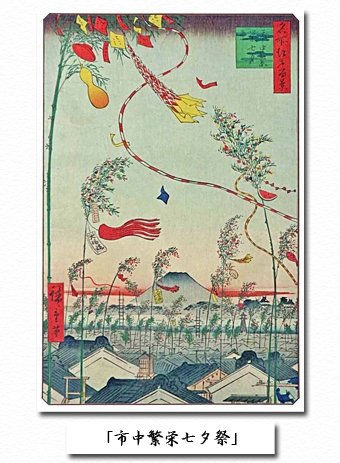
One Hundred Famous Views of Edo — Utagawa Hiroshige One Hundred Famous Views of Edo — Utagawa Hiroshige

One Hundred Famous Views of Edo 《名所江戸百景》

Utagawa Hiroshige (1797–1858)

In 1811 Hiroshige became a pupil of Utagawa Toyohiro. At first he painted beauties and actor prints, but in 1831 he produced Famous Places of the Eastern Capital, his first fine woodblock views of Edo. When his Fifty-three Stations of the Tōkaidō — made after joining the 1833 procession from Edo to Kyoto — came before the public eye, his name spread at once, and there followed his Eight Views of Ōmi and other celebrated series.

Shown here is his crowning late masterpiece, the One Hundred Famous Views of Edo: richly poetic landscapes that comforted ordinary people and strongly influenced Western Impressionists such as Van Gogh and Monet. The selection includes “Inside Kameido Tenjin Shrine,” famous for its influence on Monet; several views are shown beside present-day photographs of the same places.

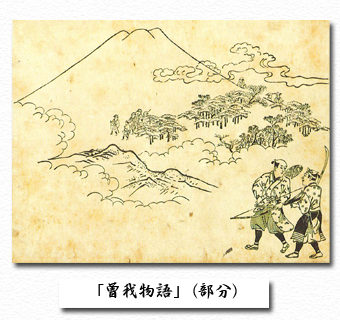
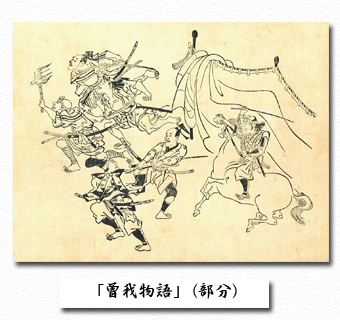
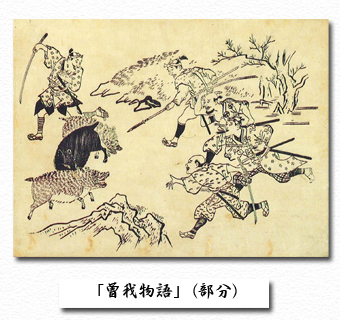
The Tale of the Soga Brothers — Hishikawa Moronobu The Tale of the Soga Brothers — Hishikawa Moronobu The Tale of the Soga Brothers — Hishikawa Moronobu

The Tale of the Soga Brothers 《曽我物語》

Hishikawa Moronobu (1618–1694)

Moronobu was born in Hota, Awa Province (now Kyonan, Chiba), into a family whose trade was embroidery and gold-thread work. Resolving in his youth to become a painter, he went to Edo, mastered the Chinese, Kanō, and Tosa styles, and established many ink-printed (sumizuri) woodblock prints with beautiful lines — earning the name “father of ukiyo-e.” He also flourished as a hand-painter of beauties, such as the “Beauty Looking Back” later used on a postage stamp.

The eleven large-format ink prints of this series — printed in black ink alone on white washi — are precious Genroku-era early ukiyo-e, taking as their subject the Tale of the Soga Brothers, hugely popular before prints developed into the colorful nishiki-e.

The tale: In the 5th month of 1193, Minamoto no Yoritomo held a great hunt at the foot of Mt. Fuji. On the night of the 28th, the brothers Soga no Jūrō Sukenari and Soga no Gorō Tokimune, after eighteen years of hardship, broke into the quarters of Kudō Suketsune — the enemy who had killed their father — and achieved their revenge. Surrounded by warriors, the elder Jūrō was killed and the younger Gorō captured; nearly spared by Yoritomo, Gorō finally lost his life at the plea of Suketsune's son. The story was celebrated throughout the Edo period in jōruri, Noh, kabuki, ukiyo-e, and fiction.

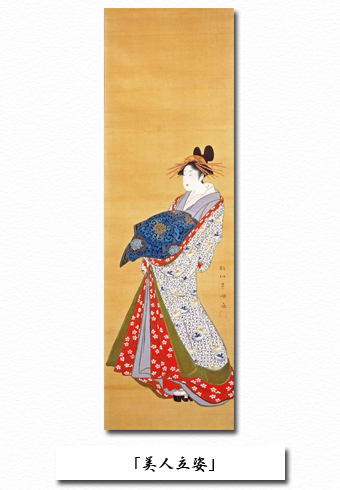
Standing Beauty — Utagawa Toyokuni I

Standing Beauty 《美人立姿》

Utagawa Toyokuni I (1769–1825)

Born in 1769 into the family of an Edo wood-carver of dolls, he grew up watching his father carve portraits of actors. He entered the studio of Utagawa Toyoharu, founder of the Utagawa school, and came to be counted the foremost ukiyo-e artist of the late Edo period, surpassing his teacher in theatre pictures and beauties. From his mid-twenties into the Bunka–Bunsei years he built the Utagawa school's dominance of the ukiyo-e world.

With fashionable hairpins adorning the chignon and layered robes in beautiful coloring, a single standing woman — slightly stoop-shouldered, one hand at the sash at her breast — exudes a chic, stylish beauty.

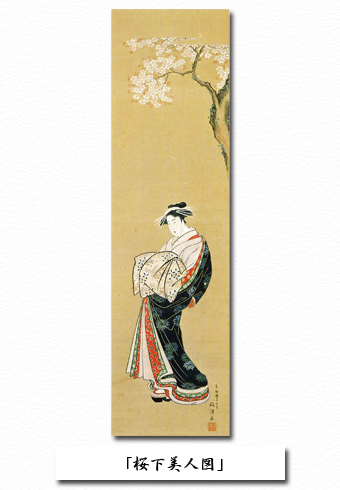
Beauty Beneath Cherry Blossoms — Kitao Masanobu (Santō Kyōden)

Beauty Beneath Cherry Blossoms 《桜下美人図》

Kitao Masanobu (Santō Kyōden) (1761–1816)

Masanobu entered, while young, the studio of Kitao Shigemasa and was active as an ukiyo-e artist. From around twenty, with Takizawa Bakin and Jippensha Ikku, he took the name Santō Kyōden and won acclaim as an outstanding gesaku writer (novelist) of Edo townsman literature.

Because his active period as a painter lasted less than ten years, very few hand-painted works survive, making this piece most precious. It shows a gorgeous courtesan (oiran) with the fashionable “yokohyōgo” hairstyle of the day. A work of around 1785.

Eight Views of Ōmi — Utagawa Hiroshige Eight Views of Ōmi — Utagawa Hiroshige Eight Views of Ōmi — Utagawa Hiroshige Eight Views of Ōmi — Utagawa Hiroshige Eight Views of Ōmi — Utagawa Hiroshige

Eight Views of Ōmi 《近江八景》

Utagawa Hiroshige (1797–1858)

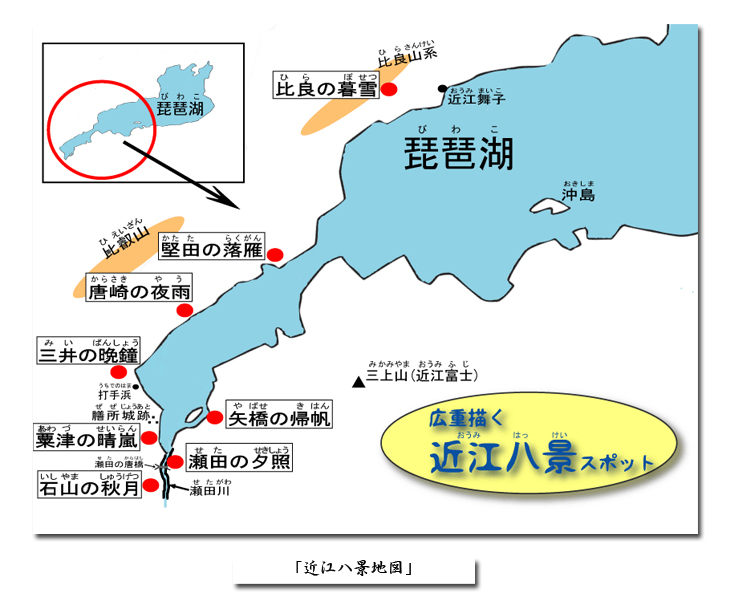
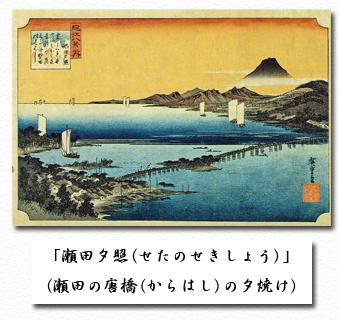
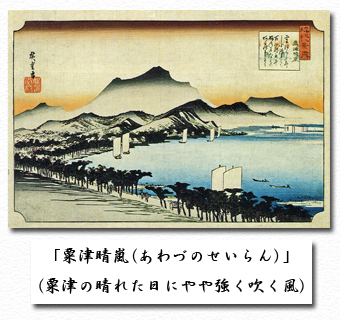
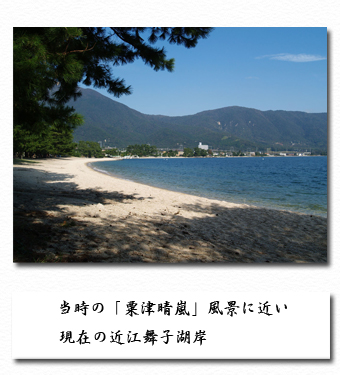
Lake Biwa in Ōmi Province (now Shiga) has been known since ancient times for its scenic beauty and beloved by poets and literati. Eight especially graceful spots on the lake's southern shore became this landscape series, modeled on the Chinese Eight Views of Xiaoxiang. Keeping the warm scenes of Lake Biwa in his heart after his 1832 journey to Kyoto, Hiroshige completed the series in 1834, adding eight waka said to have been composed by the regent Konoe Nobutada (1565–1614).

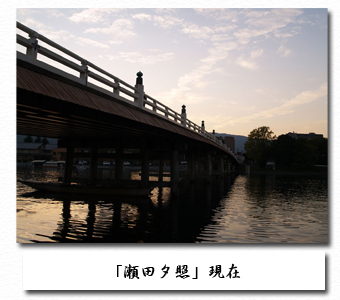
Two of the eight: “Through the drizzle of dew, past distant Moruyama, the evening sun crosses the Long Bridge of Seta.” In an autumn dusk one looks out over the Long Bridge of Seta, of which it was said, “He who controls the Karahashi controls the realm.” Far beyond, Mt. Mikami — the Fuji of Ōmi — rises as if a mirage.

“As the storm sweeps the clouds away, a hundred boats and a thousand boats draw in on the waves to Awazu.” On a clear day the mountain wind sets the pine-lined Tōkaidō along Lake Biwa rustling, and one is struck by the graceful sight of a boat sailing slowly over the white-capped water near Awazugahara. Several views are paired with present-day photographs of the same scenes.

Cherry-Blossom Viewing (handscroll) — Miyagawa Chōshun

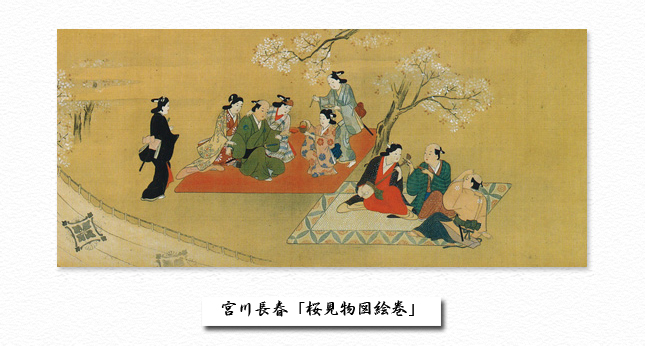
Cherry-Blossom Viewing (handscroll) 《桜見物図絵巻》

Miyagawa Chōshun (1682–1752)

Miyagawa Chōshun came from Owari Province (Aichi) and was active in the early Edo period. Learning the Tosa school with its traditional yamato-e manner, and taking cues from Moronobu and Kaigetsudō Ando, he never once turned to woodblock prints, painting only hand-painted beauties. He opened new ground in early genre painting with free compositions, rich color, and refined brushwork, becoming founder of the Miyagawa school.

Drawn out by the warmth of spring, chic Edo commoners enjoy a banquet beneath cherry trees in full bloom, listening to the tones of the shamisen.

Young Man and Maiden — Hishikawa Moronobu

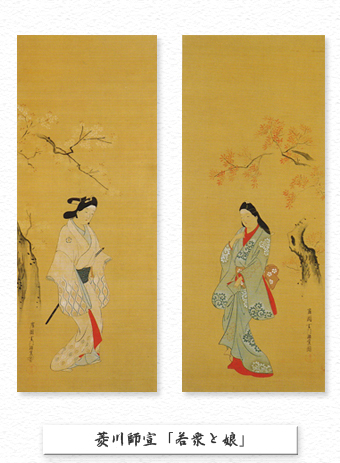
Young Man and Maiden 《若衆と娘》

Hishikawa Moronobu (1618–1694)

Moronobu — born in Hota, Awa Province, and celebrated as the father of ukiyo-e for his ink-printed woodblocks and hand-painted beauties — was enormously popular among Edo commoners for his genre paintings.

Beneath a cherry tree stands a stylish youth before his coming-of-age, in gorgeous costume; beneath a maple tree, a young woman lost in thought. A gentle, expansive grace overflowing with worldly beauty, and a deeply affecting mood — a masterpiece of Moronobu's fullest maturity.

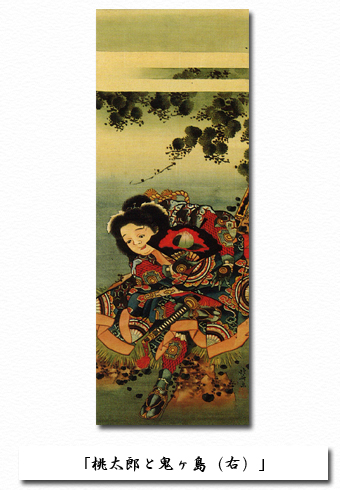
Momotarō and Onigashima — Katsushika Hokusai Momotarō and Onigashima — Katsushika Hokusai

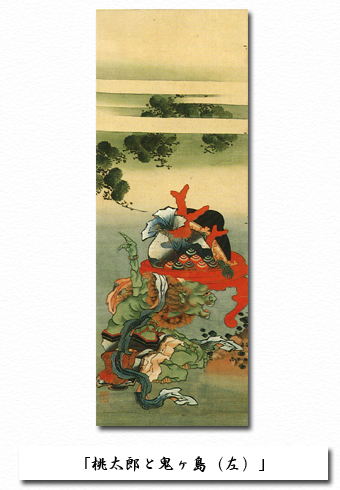
Momotarō and Onigashima 《桃太郎と鬼ヶ島》

Katsushika Hokusai (1760–1849)

Hokusai was born at Warigesui in Honjo, Edo. At nineteen he entered the studio of Katsukawa Shunshō, later taking in the Kanō, Tosa, and Rinpa schools and Western painting newly arriving from Holland to establish his own style. Changing his name some thirty times and moving house ninety-three times, he lived freely to ninety, opening new frontiers in ukiyo-e.

This hanging scroll takes as its theme the folk tale — beloved since the Muromachi period — of Momotarō subduing the ogres. It was originally a nobori banner displayed in the garden for the Boys' Festival on the 5th of the 5th month. Using the technique of his kabuki actor pictures, Hokusai expressed a child's growth powerfully; a splendid piece from his fiftieth year, magnificently colored.

Western-Style & Modern Painting

Yōga — painting in the Western manner, and works by modern masters.

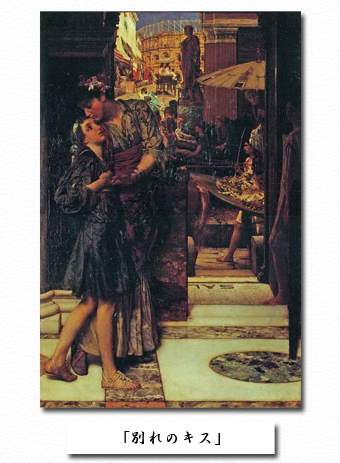
The Parting Kiss — Lawrence Alma-Tadema

The Parting Kiss 《別れのキス》

Lawrence Alma-Tadema (1836–1912)

Born in Dronrijp, the Netherlands. In 1852 he entered the Antwerp Academy of Fine Arts and studied ancient Rome, which became the framework of his art. In London, to which he moved in 1870, he faithfully reproduced antiquity in landscape, architecture, and costume while giving his figures the looks of Victorian beauties, and became a leading master of the Victorian age.

“The Parting Kiss” (1882) is said to have been a favorite of the artist himself. It depicts a mother about to leave for the Colosseum seen behind, sharing a kiss as she is loath to part from her daughter; the parasol-holding woman beyond the door is modeled on the artist's wife, Laura. The coolness of the marble and the warmth of the two figures upon it form a superb contrast.

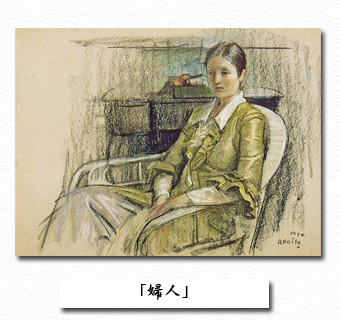
A Lady — Koiso Ryōhei

A Lady 《婦人》

Koiso Ryōhei (1903–1988)

Born in Kobe in 1903 and raised in an earnest Christian atmosphere. In 1922 he entered the Western-painting department of the Tokyo School of Fine Arts under Fujishima Takeji; in 1926 his “Portrait of Miss T” won a special selection at the 7th Teiten. He then went to France and was accepted at the Salon d'Automne. Influenced by Ingres and Vermeer — the foundation of his art ever after — he later served for twenty years as a professor at his alma mater.

This work, from 1974, is a fine pastel brimming with the pure lyricism that wells from within, characteristically Koiso. He received the Order of the Rising Sun and the Order of Culture and was a member of the Japan Art Academy.

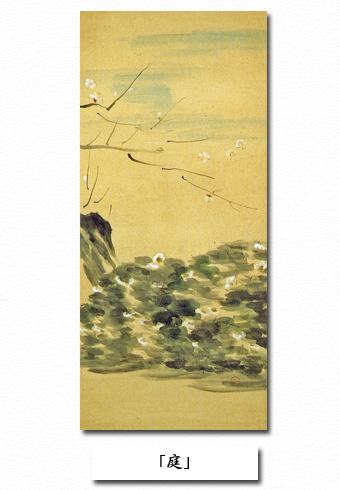
The Garden — Sakamoto Hanjirō

The Garden 《庭》

Sakamoto Hanjirō (1882–1969)

Born in 1882 in Kurume, a classmate of Aoki Shigeru. At Aoki's urging he went to Tokyo at twenty and studied Western painting at Koyama Shōtarō's “Fudōsha.” He won a prize at the first Bunten and was recognized as a “philosopher painter” for his highly spiritual works. From 1924 he spent three years in France; what he learned there was not an infatuation with the West but a deep sympathy for the nature and traditional culture of Japan and the East. On returning he declined the central art world's invitations and went home to Chikugo.

This work perhaps depicts the garden of his studio in Yame; in ink-painting-like pale color it shows early-spring white plum and white camellia — a fine picture conveying Sakamoto's wish to become wholly one with nature.

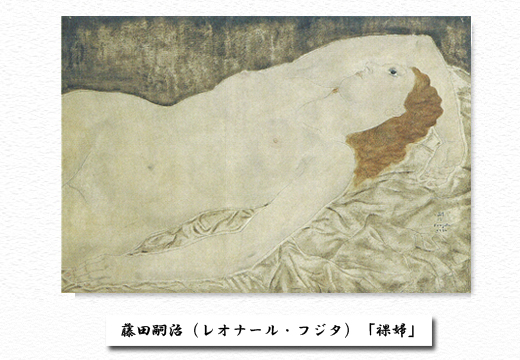
Nude — Fujita Tsuguharu (Léonard Foujita)

Nude 《裸婦》

Fujita Tsuguharu (Léonard Foujita) (1886–1968)

Born in Tokyo in 1886. After graduating from the Western-painting department of the Tokyo School of Fine Arts, he went to France in 1913. With innate talent and a richly individual life, he was celebrated worldwide as a top star of the École de Paris, alongside Picasso.

“I want to paint pictures no Western painter has painted,” he resolved, and unveiled the nude paintings that astonished French painters and critics. Noting the beauty of women's skin expressed by ukiyo-e artists such as Utamaro and Harunobu, he created his own distinctive milky white; harmonized with fine black outlines drawn in ink with a menso brush, it showed Europeans a beauty of nude skin they had never seen, and Foujita's fame was assured.

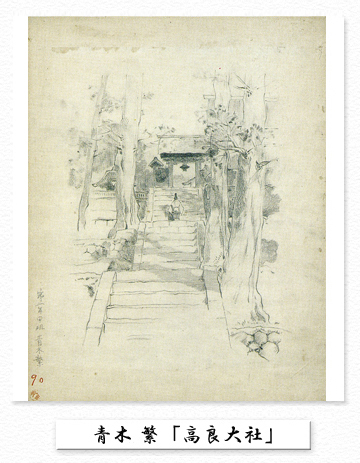
Kōra Taisha Shrine — Aoki Shigeru

Kōra Taisha Shrine 《高良大社》

Aoki Shigeru (1882–1911)

Painted in 1896, thought to be a drawing-class assignment made while Aoki was a student at Kurume Middle School Meizenkō. Among his surviving works it is the oldest and most precious of the few from before he went to Tokyo. At the lower left is the signature “Second Year, Group A, Aoki Shigeru,” with a mark of “90 points” and the seal of his drawing teacher, Mr. Takeda Yaichirō.

In his later years Aoki wrote to his sisters that when he died he wished his ashes buried “at the roots of the pines on Keshikeshi Mountain deep behind Mt. Kōra.” Mt. Kōra and its shrine, Kōra Taisha, first among the shrines of Chikugo, were perhaps the spiritual home of Aoki's whole life.

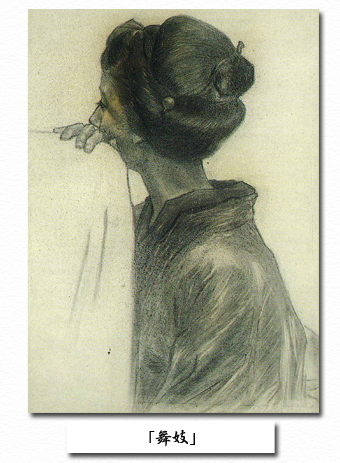
Maiko — Aoki Shigeru

Maiko 《舞妓》

Aoki Shigeru (1882–1911)

Painted in 1903; it appears to be a copy Aoki made, while a student at the Tokyo School of Fine Arts, of the preparatory drawing for his teacher Kuroda Seiki's “Tale of the Past” (since destroyed by fire).

During his school years Aoki's talent was recognized early by Kuroda, though Kuroda seems to have found the young painter's willful manner hard to handle. Contrary to that manner, Aoki held deep respect for Kuroda's works, and it is recorded that he praised their splendor to fellow students.

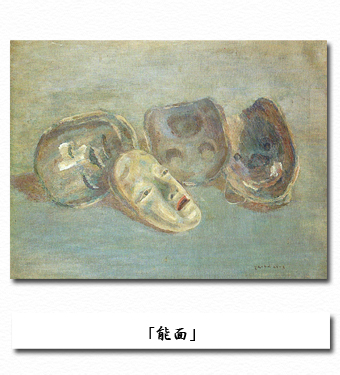
Noh Mask — Sakamoto Hanjirō

Noh Mask 《能面》

Sakamoto Hanjirō (1882–1969)

Painted in 1944. Having spent three years in Paris from 1924, Sakamoto refused to live in Tokyo and went home to the nature-rich Chikugo of his birth, where he painted so many horses that he was called “Sakamoto of the horses.” From during the Pacific War, the subject he took up was the Noh mask; at the urging of his friend the poet Miki Rofū, he had become a great lover of Noh.

For about twenty years he continued his “Noh Mask” series and came to be called “Sakamoto of the Noh masks.” This is the first work on the theme among his known works. An expressionless woman's mask is placed face-out at the center, while the three overturned masks around it, by contrast, hold humanlike expressions — a meaningful and intriguing composition.

Ceramics, Glass & Sculpture

Porcelain, tea ware, glass, and wood carving.

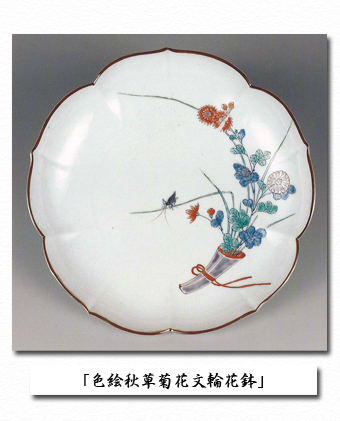
Foliate Bowl with Autumn Grasses and Chrysanthemums — Kakiemon workshop

Foliate Bowl with Autumn Grasses and Chrysanthemums 《色絵秋草菊花文輪花鉢》

Kakiemon workshop (late-early Edo period)

In 1617 the first Kakiemon (real name Sakaida Kizaemon) opened his kiln at Nangawara in Arita. Around 1643–47, after seeking a secret technique from a Chinese man and enduring many failures, he succeeded with “red-enamel porcelain” (akae). The method of drawing vivid red enamel on a white body was guarded within the Sakaida family and came to be called “Kakiemon.” In the first master's later years the pure-white “nigoshide” body was created, bearing clean color-enamel patterns.

This work uses milky-white nigoshide as its base, arranging chrysanthemums and other autumn grasses from the right, with a cricket resting on a leaf-tip that stretches toward the center of the dish — a poetic masterpiece of early Kakiemon.

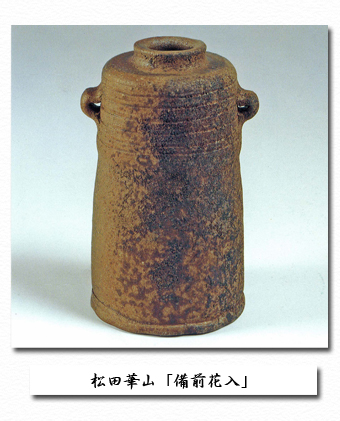
Bizen Flower Vessel — Matsuda Kazan

Bizen Flower Vessel 《備前花入》

Matsuda Kazan (1936–2003)

Bizen ware, called the art of earth and fire, has a 400-year history in Okayama Prefecture, fired at high temperature by the unglazed “yakishime” technique in which the clay hardens densely. The maker, Matsuda Kazan, worked mainly in tea-ceremony utensils, adding to the plain, earthy surface his own distinctive scattering and flowing “sesame” (goma) ash effects, giving his works an outstanding depth of flavor.
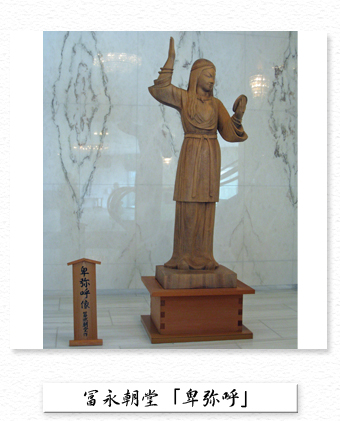
Himiko (statue) — Tominaga Chōdō

Himiko (statue) 《卑弥呼》

Tominaga Chōdō (1897–1987)

Tominaga Chōdō was born in 1897 in Hakata. Taking Takamura Kōun as his master, he studied under his fellow townsman Yamazaki Chōun, learning traditional wood-carving technique under strict discipline. His “Woman of the Snowy Mountains” was accepted at the Teiten on his first attempt, and he won various prizes, seeking to elevate his spirit through Zen and the tea ceremony. In 1944 he settled in Dazaifu, where he found his own distinctive sculpture.
This Himiko statue was carved from camphor wood when Chōdō was 74; the carving was made into a television documentary, “The Phantom Queen Himiko,” broadcast in November 1971 to high acclaim. In his later years he lived single-mindedly by the chisel, giving life to wood while raising the next generation. He died on December 12, 1987, aged 90.

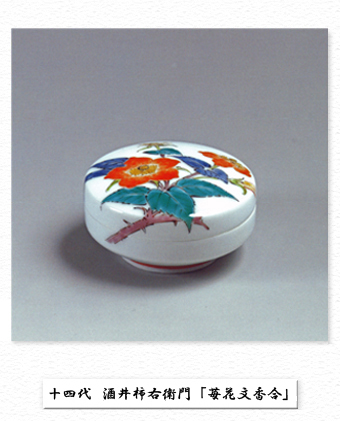
Incense Container with Strawberry-Flower Design — 14th Sakaida Kakiemon

Incense Container with Strawberry-Flower Design 《苺花文香合》

14th Sakaida Kakiemon (b. 1934)

The nigoshide (milky-white body) technique of the early Kakiemon, which had died out midway through the Edo period, was reconstructed after the Pacific War when the 12th and 13th generations researched the early bodies and pigments and restored the ground on which “red” overglaze harmonizes with a pure-white, translucent porcelain.

The dignity of Kakiemon porcelain, told by 350 years of history, and its concise, vividly colored compositions that leave open space, are now inherited by the 14th generation, a Living National Treasure who guards this tradition as a front-runner of Japanese color-enamel porcelain.

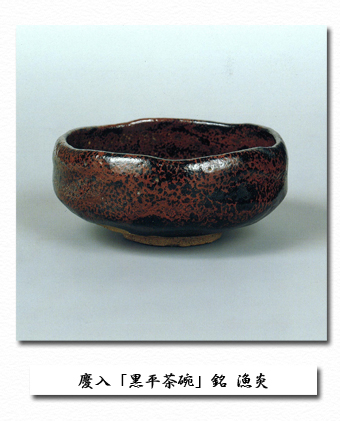
Black Flat Tea Bowl, named “Isaribi” (Fishing Fires) — 11th Raku Keinyū

Black Flat Tea Bowl, named “Isaribi” (Fishing Fires) 《黒平茶碗 銘 漁火》

11th Raku Keinyū (1817–1902)

As the saying goes, “first Raku, second Hagi, third Karatsu,” Raku ware has always been known as a masterwork vessel of the tea ceremony. With about 400 years of history since the first master Chōjirō worked under Sen no Rikyū, the Raku family has fired tea bowls for the Senke houses. Made without a wheel, formed entirely by hand and spatula (teokune) and fired at a low 800°C, it is a distinctive glazed ware.

Keinyū's era was the turbulent late Edo and Meiji Restoration, when the flourishing tea ceremony had faded into the shadows. To convey the spirit of Rikyū's “wabi tea,” he made bowls that took in new styles and designs and passed them to later ages; he is called a master craftsman of the Raku family in the modern era.

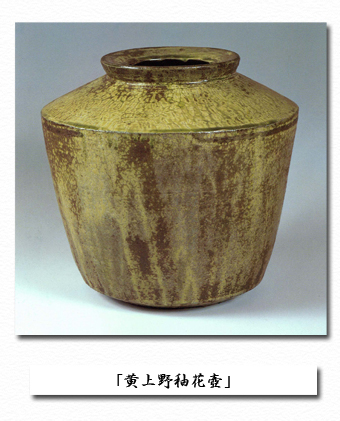
Yellow-Agano-Glaze Flower Jar — Kōzuru Gen

Yellow-Agano-Glaze Flower Jar 《黄上野釉花壺》

Kōzuru Gen (b. 1938)

Born in 1938 as the eldest son of a kiln house of Agano ware in Fukuoka Prefecture. After graduating from Arita Technical High School, he entered the 400-year Agano-ware tradition. From his own high aspirations he turned also to sculpture and painting; moving his workshop from Tagawa to Hisayama, his new-style works were accepted at the Nitten and won a prize at the West Japan Craft Exhibition.

Accumulating research on old Agano and Takatori wares, and using the clays of Kyushu with various glazes, he produced work after work combining sturdiness and warmth. From 1965 his works won prize after prize; he is now based in both Fukuoka and America, creating new sculptural forms.

Vase with Flowers and Plants — Émile Gallé

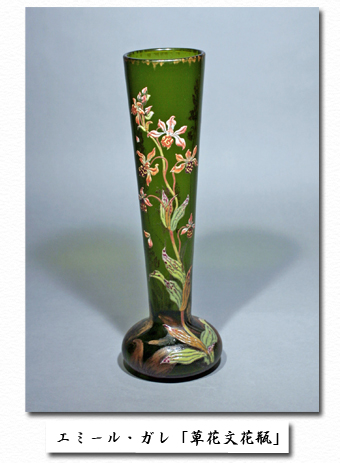
Vase with Flowers and Plants 《草花文花瓶》

Émile Gallé (1846–1904)

The supreme master of French Art Nouveau glasswork. Gallé was born and raised in Nancy, in the beautiful Lorraine region, where he nurtured a love of delicate flowering plants and lovely insects. This fused with the 19th-century Japonisme then in vogue around Paris, and he came to express the “beauty and spirit of nature” underlying traditional Japanese art, earning praise as “poems of glass” and “speaking vases.”

The exhibited vase sets soft, supple pale-crimson flowering plants upon clear green glass — just like looking at the flowers and grasses of a beautiful Japanese painting.

The Religious Paintings of Tetsurō Sugimoto

Sugimoto Tetsurō (1899–1985) devoted almost his whole career to religious painting. Turning from the worldly art establishment to seek a true art, he depicted the sacred across the world's great faiths.

Shiva as Nataraja — Tetsurō Sugimoto · Hinduism

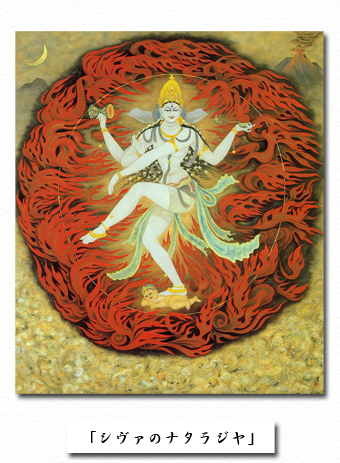
Shiva as Nataraja 《シヴァのナタラジヤ》

Tetsurō Sugimoto · Hinduism (1971)

This god is said to have been born from the suggestion of the active volcanoes of the Himalayan region; Shiva's mighty power is symbolized by the violent earthquakes, storms, and floods that arise from the mountains. His complete aspect is as Nataraja, the King of Dance, standing and dancing at the center of a cosmic wheel that turns wrapped in blazing flames. The dwarf beneath his foot is a demon that sought to harm Shiva.

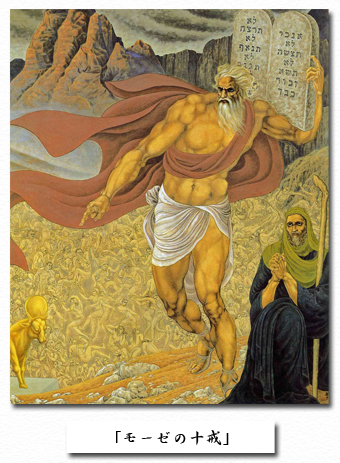
The Ten Commandments of Moses — Tetsurō Sugimoto · Judaism

The Ten Commandments of Moses 《モーゼの十戒》

Tetsurō Sugimoto · Judaism (1973)

The Israelites, living without freedom as slaves of the king of Egypt, were led out under Moses toward the land of Canaan promised to their ancestors. Tens of thousands crossed the Red Sea and, after a long and painful journey, reached the wilderness of Sinai. But they turned against their leader's teaching, worshipping a golden calf and falling into greed and strife. Receiving the divine will, Moses came down from Mt. Sinai and sternly rebuked them; on the stone tablets appeared the words of God's ten commandments — you shall not kill, you shall not steal, you shall not bear false witness.

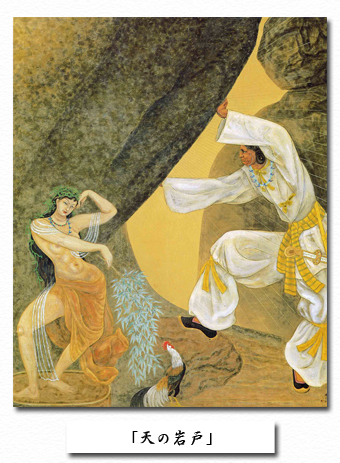
The Heavenly Rock Cave — Tetsurō Sugimoto · Ancient Shinto

The Heavenly Rock Cave 《天の岩戸》

Tetsurō Sugimoto · Ancient Shinto (1977)

According to Japan's founding myth, when Amaterasu Ōmikami, unable to bear the violence of Susanoo-no-Mikoto, hid in the Heavenly Rock Cave, Ame-no-Uzume-no-Mikoto performed before it a frenzied, divinely inspired dance to the rhythm of the kagura, and the assembled gods burst into laughter loud enough to shake the High Plain of Heaven. When the great goddess opened the rock door a crack to peer out, the mighty Tajikarao-no-Mikoto pushed it open, and with the crow of the first cock the dark heaven and earth were filled with bright, shining light. (From the Kojiki.)

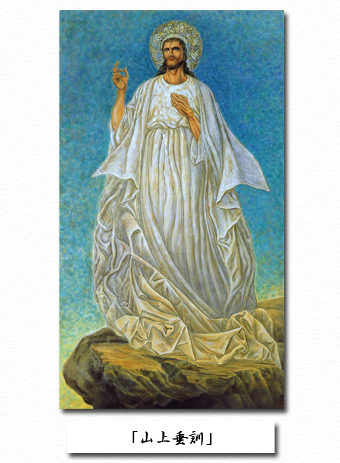
The Sermon on the Mount — Tetsurō Sugimoto · Christianity

The Sermon on the Mount 《山上垂訓》

Tetsurō Sugimoto · Christianity (1975)

From all over Judea — from Jerusalem and the coastal regions of Tyre and Sidon — a great many believers and suffering people gathered before the Savior to hear the good news. Jesus stood upon the mountain and gave his famous sermon, and one after another showed miracles. This is the figure of Jesus in his prime, in the most many-sided period of activity in his life.

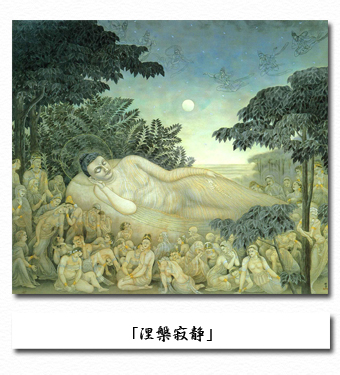
Nirvana, Perfect Tranquility — Tetsurō Sugimoto · Buddhism

Nirvana, Perfect Tranquility 《涅槃寂静》

Tetsurō Sugimoto · Buddhism (1971)

In the shade of the sal trees at Kushinagar in northeastern India, on the night of February 15, 543 BCE — 46 years after Śākyamuni attained enlightenment — as the full moon sank in the western sky toward dawn, Śākyamuni entered final nirvana. This nirvana, having cut off worldly desires and reached absolute stillness, is the ideal Buddhist image of the Buddha and, as a symbol of absolute peace, is expressed as a figure of flowerlike softness, beauty, and repose.

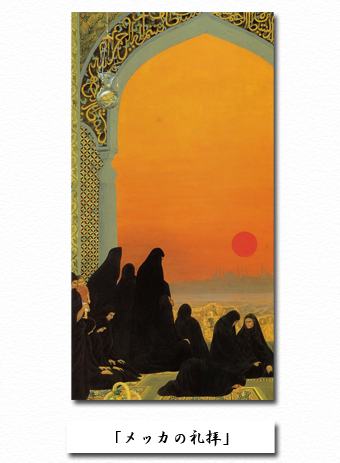
Prayer toward Mecca — Tetsurō Sugimoto · Islam

Prayer toward Mecca 《メッカへの礼拝》

Tetsurō Sugimoto · Islam (1975)

Prayer begins as the sun sets and continues into the gathering dusk; the dawn Koran too must always be observed. As the sun sinks over the scorching desert, separate groups of men and women gather at the mosque. In homes, workplaces, and even while traveling, when the five daily prayer times come everyone at once offers devout prayer toward the holy city of Mecca. Prayer is the very center of life — to work always between prayer and prayer is the Islamic life, the expression of heartfelt devotion and faith toward God, Allah.